Guide to Moving Safes and Heavy Equipment in San Diego
Moving a safe or a piece of heavy equipment is never a casual weekend project. These items are dense, difficult to maneuver, and completely unforgiving if handled incorrectly. But with the right preparation and a strategic approach rather than relying on strength alone, you can ensure a far safer, more controlled experience.
This guide outlines what to look for, how to prepare, and the common pitfalls to avoid. Consider it professional insight from the logistics, safety, and moving experts who specialize in handling oversized and specialty items.
1. Before Anything Moves: Know Exactly What You’re Working With
The first rule with equipment or safes is simple: never guess. A 600-1,500 lb safe behaves differently from furniture or appliances. Many industrial machines have irregular weight distribution that affects how they tilt or roll.
Start with three essential details: exact weight, dimensions, and clearance requirements. This single step determines the equipment you need, the number of movers required, and whether the structure or flooring can handle the load.
After that, walk the path the item needs to travel. Measure narrow hallways, corners, stairs, door frames, and slopes. Many relocations go wrong because of one overlooked step or unexpected obstruction.
2. Meet California-Specific Requirements and Permits
California has unique rules when it comes to oversized and heavy equipment:
- The California Department of Transportation (Caltrans) requires oversize/overweight permits for transport over state highways.
- Some cities and counties (especially in the Bay Area and Southern California) have additional local permitting.
- California residential and commercial buildings are often subject to stricter weight limits due to seismic standards.
- If the equipment is oversized or unusually heavy, you might need:
- Caltrans Single Trip Permits
- Local city/municipality movement approvals
- Escort vehicles for highway transport
You don’t want unexpected delays or fines, so confirm the legal requirements early.
3. Assess Both Locations: The Start and the Destination Matter
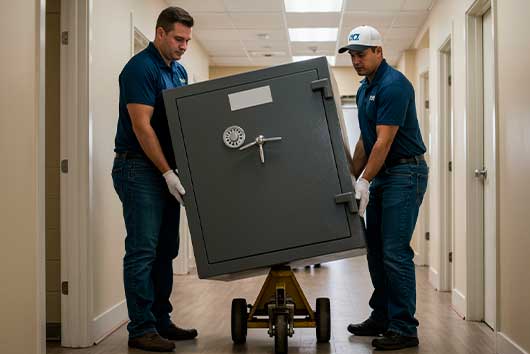
Safely removing the item is only half the job. Where you’re going is just as important.
At the origin
Ask yourself:
- Can the item be removed without disassembly?
- Are there weight-restricted floors, railings, or stairs?
- Does it require surface protection?
Extracting the item may be the hardest part, and understanding these constraints early is important.
At the destination
This is where people often underestimate complexity. Before moving day:
- Confirm the destination flooring is load-rated.
- Ensure the item fits the intended space.
- Verify utility access (power, ventilation, plumbing) for machinery.
- Prepare a clear, stable landing zone.
Advanced preparation makes the final placement smooth and predictable.
Tip: Many California cities have narrow streets, hills, or parking restrictions. This creates unique access challenges. A professional team anticipates these.
4. Planning the Move: Your Blueprint for a Smooth, Safe Day
You might be tempted to skip the planning stage, but this is where you either set yourself up for a safe, controlled move or an afternoon of stressful improvisation.
A good move plan has a clear flow:
Disconnection → disassembly → route setup → lifting → loading → transport → unloading → reassembly → testing.
When you know what’s happening next, nothing feels rushed or improvised.
Timing is another big factor. Weather matters. Rain makes ramps slippery. Wind complicates crane lifts. Heat affects hydraulic systems and even flooring materials. If you have the choice, plan your move for a day and time when you won’t be fighting the elements or heavy traffic.
And don’t forget permits. If the equipment is oversized or unusually heavy, you might need highway permits, designated transport routes, or even escort vehicles. It’s not fun paperwork, but you don’t want unexpected delays because you skipped this step.
5. Building the Right Team: Why You Don’t Want to Do This Alone
When it comes to heavy moves, more hands don’t always mean safer hands. Instead, you need the right hands.
If your equipment weighs more than a few hundred pounds, or if there are stairs, tight turns, or sensitive components involved, it’s time to bring in professional movers like Oakley Relocation. They have specialized equipment, like safe dollies, machine skates, toe jacks, reinforced ramps, and industrial straps, and they know how to use them.
Even with pros, communication plays an important role. You need a reliable spotter who can watch blind spots, monitor clearances, and communicate any danger before it becomes a problem. Before anything starts moving, everyone on your team should know the plan, the route, the hazards, and the hand signals or radio calls you’ll be using.
6. Preparing the Equipment: Take It Apart, Protect It, Stabilize It
One of the smartest things you can do is reduce the equipment complexity before you move it. Anything that can safely come off, doors, panels, shelves, and accessories, should come off. For safes, empty them completely. For machines, label every cable and connection point.
The idea is that nothing should move independently during the move. Secure anything that hangs, rattles, or dangles. Tape down wires, bundle hoses, and protect delicate surfaces. Wrap the equipment in moving blankets or foam, then add shrink wrap or corner protectors. This step not only protects the machine, but also protects your walls, floors, and doorframes.
7. The Actual Move: Lifting, Rolling, and Loading Without the Drama
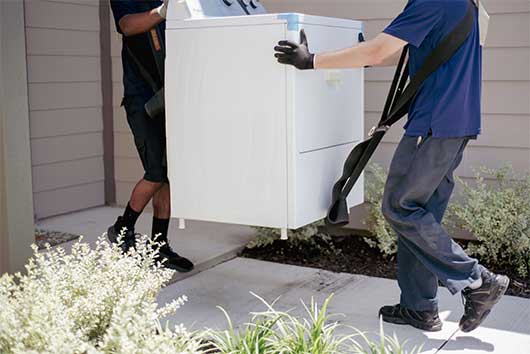
Each piece of equipment will need the right tool: machine skates for very heavy items, safe dollies for tall safes, forklifts for massive loads, toe jacks for lifting just enough to slip a platform underneath, or cranes for truly heavy or awkward items.
It is important to maintain control at all times. When you lean a safe on a dolly, you don’t want it swinging or sliding. When you lift a machine, you need it to be steady and balanced.
Once the equipment reaches the truck or trailer, how you position it matters. You need it centered over the axles, balanced side-to-side, and secured tightly. A poorly balanced load can sway a trailer or loosen straps on the highway.
During transport, expect the driver to move more cautiously than usual. Heavy loads react differently to bumps, turns, and sudden stops.
8. Final Stage: Getting the Equipment Back Together and Ready
When you arrive, the move isn’t “over.” It’s just entering its last act. Unloading is as delicate as loading, and you need to recheck your surroundings: ramps, flooring, clearances, and the final placement zone.
When everything is in position, take your time reassembling. Your labels, photos, and notes from earlier make this much easier. Double-check fittings, wiring, hydraulic lines, torque settings, and leveling. A machine that isn’t aligned perfectly can develop issues immediately.
Before calling the job complete, run a controlled test. Listen for odd noises. Look for leaks. Watch for unusual vibrations. Calibrate what needs calibrating. A quick test now protects you from costly surprises later.
Special Considerations for Safes
Safes look simple, but they behave very differently from other heavy items. Their weight distribution, internal components, and stability challenges make them a category of their own. If you’re planning to move a safe, here are the points you need to keep front and center.
Understand the Weight Behavior
- Most safes carry the majority of their weight in the body, not the door. That means they can feel oddly unbalanced the moment you tilt them.
- Safes can tip faster than you expect.
- Even a small lean can turn into a loss of control.
- Tight corners and stair transitions increase the risk dramatically.
Take Staircases Seriously
- Stairs are the most dangerous part of any safe move. Safes don’t flex, pivot, or “angle” gracefully.
- You need a stair-climbing dolly or professional safe cart, not a basic hand truck.
- One bad angle can turn the safe into a runaway object.
- Never rely on physical strength alone when descending or climbing stairs.
Empty the Safe Completely
- It’s not just about reducing weight, it’s about protecting the contents and the lock.
- Items shift inside during tilting and rolling.
- Heavy contents can damage the interior.
- Vibrations can affect lock mechanisms or tumblers.
Protect the Lock and Hinges
- People often forget how sensitive safe locks really are.
- A hard bump can knock the lock out of alignment.
- Hinges can bend under side pressure.
- Slammed landings can freeze a safe shut.
Prepare the Destination in Advance
- Once a safe is placed, you won’t want to move it again.
- Plan the final position before you start.
- If the safe needs anchoring, pre-drill or prepare the bolt holes.
- Verify the floor can support the weight, especially upstairs.
Special Considerations for Industrial Equipment

Industrial equipment brings its own set of challenges. It’s heavier, more complex, and often far more sensitive than it looks. Unlike a safe, which is basically a giant steel box, industrial machines have electrical systems, fluids, moving parts, and precision components that can be thrown off by a single mistake. Here is how you should move it.
Know What Systems You’re Working With
Before anything moves, you need to understand the machine’s “internals.”
- Electrical connections
- Hydraulic or pneumatic lines
- Coolant or lubrication systems
- Sensors, belts, and calibration points
A quick disconnect without a plan can lead to leaks, wiring damage, or alignment issues on reassembly.
Secure or Remove Anything That Can Shift
Industrial machines often have guards, panels, levers, and attachments that can wiggle loose or bend during the move.
- Remove what can be removed
- Label every wire, hose, and connection
- Wrap and protect sensitive components
This saves you hours during reassembly and prevents accidental damage.
Use Proper Rigging and Lifting Points
Machines aren’t always balanced left-to-right or front-to-back.
- Always lift from manufacturer-approved rigging points
- Avoid “hooking on” to anything that merely looks strong
- Keep the load level to prevent internal strain
A machine lifted unevenly can twist its frame or damage internal tracks.
Watch the Weight Distribution Carefully
Industrial equipment can have extremely concentrated weight zones.
- Some machines have a heavy motor on one side
- Others have a raised center of gravity
- A few balance differently when tilted vs. upright
Understanding these quirks keeps the equipment stable while rolling, lifting, or lowering.
Plan a Clean, Controlled Path
Dust, debris, uneven floors, or spilled fluids can affect how a multi-ton machine behaves.
- Clear the route
- Cover fragile floor surfaces
- Create stable, level transition points
Protect the Machine During Transport
Because these machines have delicate internal systems, transportation matters more than people expect.
- Cushion the machine with blankets or foam
- Strap it with industrial tie-downs
- Prevent vibration whenever possible
Reassembly and Calibration Matter
Getting industrial equipment back online isn’t as simple as plugging it in.
- Re-level and re-anchor the machine
- Reconnect all utilities
- Test hydraulics, electricals, and motors
- Run a small, controlled start-up
This is where your photos and labels earn their keep.
The Biggest Mistakes People Make (and How You Avoid Them)
Even pros slip up when they get too comfortable. The biggest mistakes usually come from forgetting just how uncooperative heavy equipment can be.
| Task | Best Practice (Do This) | Common Mistake (Avoid This) |
|---|---|---|
| Weight/size assessment | Verify with manuals & measurements | Guessing based on appearance |
| Equipment prep | Disassemble, label, document | Moving fully assembled with loose parts |
| Loading | Use forklifts, cranes, and proper rigging | Using weak straps or one tie-down |
| Weight distribution | Center load over axles | Side-heavy or front-heavy loading |
| Securing | Multiple high-rated chains/straps | Relying on one strap or rope |
| Safe moving | Use pros or trained crew | Trying to muscle it with friends |
| Transport | Check permits & road restrictions | Ignoring height/weight limits |
| Reassembly | Follow photos, diagrams, manuals | Improvising or “winging it” |
| Safety | Use PPE, spotters, communication | Rushing or skipping safety steps |
FAQs
Q: Do I need a permit to move heavy equipment in California?
A: If the equipment exceeds state size or weight limits, a Caltrans permit is required. Some municipalities also require local clearance.
Q: How do I know if my item is considered “oversized” in California?
A: As a general rule, loads above 80,000 lbs, or beyond standard length/width restrictions, require permitting. When in doubt, check Caltrans requirements or ask a professional.
Q: Are there special rules for moving a safe in California?
A: Yes. Heavy safes often require commercial-grade equipment, and any safe installed in commercial buildings may need to comply with California seismic safety codes.
Q: Is it safe to move a safe up or down staircases myself?
A: Generally, no. In California moves, stairs are where most injuries occur. Professional movers use stair-climbing dollies, lift systems, and anchoring techniques.
Q: Can residential floors support the weight of a large safe?
A: Many California homes, especially older ones, may not be engineered for heavy load concentration. Always check load ratings first.
Q: Does California require seismic anchoring?
A: In many commercial and public buildings, yes. Residential requirements vary, but anchoring is strongly recommended.
Q: Is it legal to transport heavy equipment on residential streets?
A: Usually yes, but oversized loads may require local city permits.
Q: Should I move a safe myself?
A: Unless it’s a lightweight safe on a flat path, most safe moves are best handled by professionals due to the risk of injury and property damage.
Move Safes and Heavy Equipment Safely with Oakley Relocation
When you’re dealing with safes or heavy equipment in California, you don’t just need movers. You need a team that understands the weight, the complexity, and the responsibility that comes with handling items like these. Oakley Relocation brings the skill, planning, and specialized equipment required to move your most challenging pieces safely and efficiently. From prepping and protecting your equipment to navigating tight spaces, meeting the required California permits and setting everything up exactly where you want it, we make moving special items feel surprisingly smooth and stress-free.
If you’re planning a move in or around San Diego, give yourself the peace of mind that comes from working with experts who genuinely care about doing the job right. Let Oakley Relocation take the heavy lifting off your hands. Contact us today for a free, no-pressure moving quote.